Community
UCAP Celebrates 57 Years in Service in June
Story by Laura A. Corff, Transit Director / United Community Action Program, Inc.
United Community Action Program, Inc. (UCAP) will celebrate 57 years of service this June. The private, nonprofit agency employs approximately 450 individuals dedicated to strengthening communities through programs in education, housing, childcare nutrition, public transportation, Court Appointed Special Advocates (CASA), and other essential services that impact individuals and families across the region.
UCAP's work is made possible through the investment of federal, state, and local funding, supporting its mission: to improve people's lives, embody the spirit of hope, and, in partnership with communities, help low-income individuals achieve greater self-sufficiency and meaningful participation in society.
Early Childhood Education
UCAP Head Start and Early Head Start has 15 sites in eight counties. In 2025, Early Head Start program served 35 pregnant women and 522 children from birth to 36 months. The Head Start program provided services to 508 children ages three and four. Notably, 97% of enrolled children received medical services, and 10.6% received disability services during the year.
Housing
UCAP provides affordable housing options for low-income individuals and families. Single-family rental units are located in Billings (2), Blackwell (1), Fairfax (3), Newkirk (4), Pawnee (6), Perry (2), and Tonkawa (4). Multi-family housing is also available in Sand Springs and Pawnee.
Child Care Food Program
The Child Care Food Program supported 66 Oklahoma Department of Human Services-licensed home childcare providers across 16 counties. Through this federally funded program, 222,618 nutritious meals meeting U.S. Department of Agriculture guidelines were served, benefiting an average of 447 children each month. The program plays a vital role in improving child health outcomes while helping make childcare more affordable for low-income families.
Public Transportation
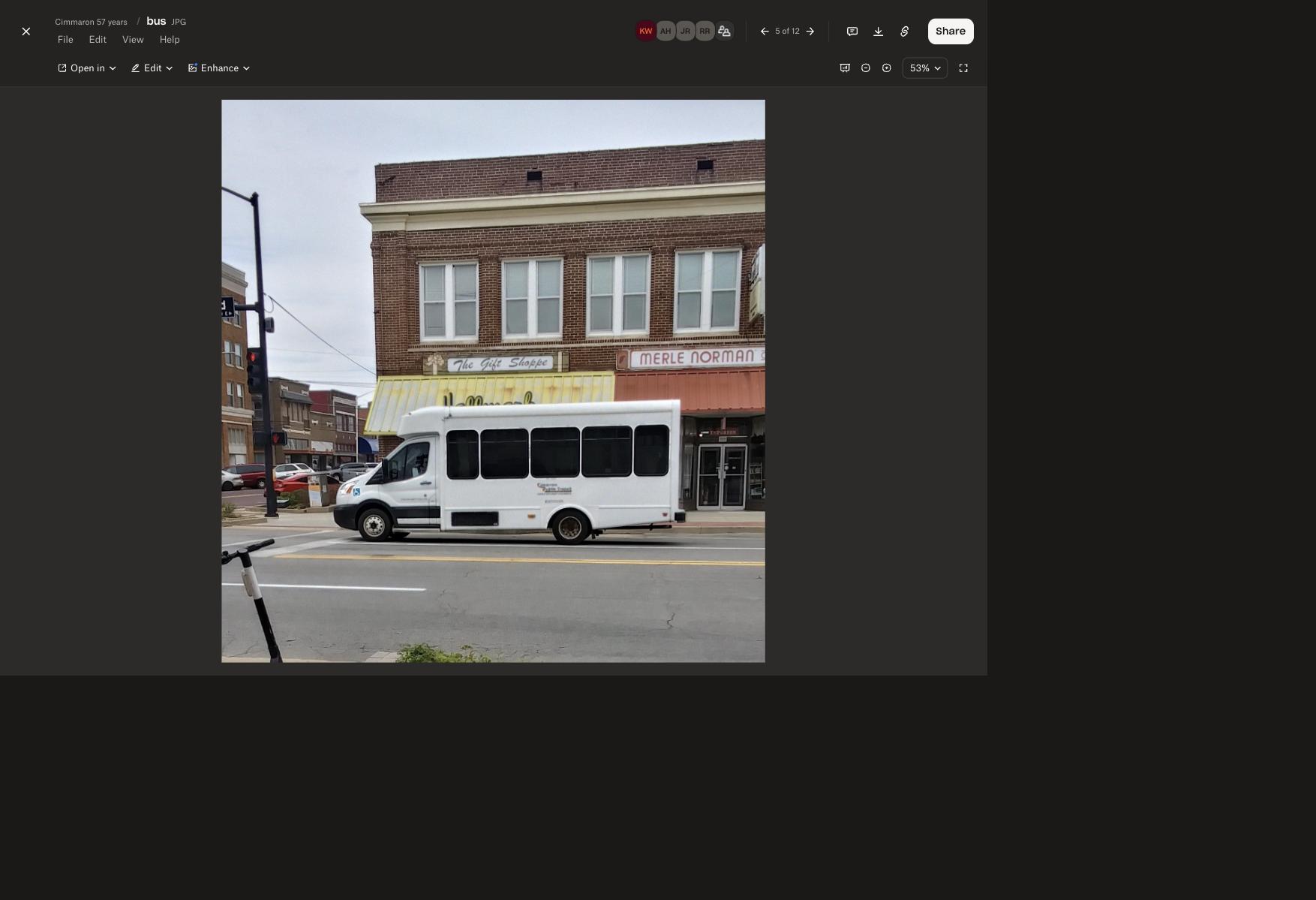
The Cimarron Public Transit System (CPTS) replaced 11 ADA-compliant vehicles in 2025. Drivers traveled over 1,071,000 miles to provide 115,056 shared-ride trips across a five-county area. Public transportation continues to remove barriers for low-income individuals and families, enabling access to employment, healthcare, and essential services. CPTS provided reduced or free fares for eligible riders, including: Employment transportation: 26,808 trips; Older adults: 20,605 trips; Veterans: 464 trips; Tribal citizens: 2,637 trips; Non-emergency medical transportation: 21,630 trips; Single-parent households: 4,087 trips.
Court Appointed Special Advocates (CASA)
Through the CASA program, 19 trained advocates served abused and neglected children in Pawnee and Osage counties. Volunteers contributed 1,806 hours of service. In 2025, seven children were adopted, and 17 were successfully reunited with their families.
Family and Community Services
UCAP provided emergency assistance for food, prescriptions, fuel, utilities, and housing needs, along with information and referral services. Additionally, 180 individuals received Volunteer Income Tax Assistance (VITA) services. Partnerships with local food banks resulted in the distribution of 17,956 food packages, while community collaborations provided 18,555 clothing items to 6,185 individuals.
Outreach services are available at 501 Sixth Street, Pawnee; Associated Charities, 212 E. Bridge Avenue, Blackwell; and Operation Blessing, 803 Market Street, Perry.
"Community Action agencies are unique in that local citizens help identify the needs within their communities," said Executive Director Johnny Bryant. "Our programs and partnerships create meaningful, positive impacts in rural areas. Our board - comprised of local business leaders, elected officials, and community members - plays a vital role in guiding decisions and outcomes."
During the year, UCAP collaborated with a wide range of partners, including nonprofit organizations, faith-based groups, municipalities, state agencies, businesses, coalitions, school districts, tribal entities, housing organizations, statewide associations, and higher education and healthcare institutions.
The economic impact of UCAP extends beyond direct services. Its workforce and contributions to state and local taxes continue to strengthen the broader regional economy.