
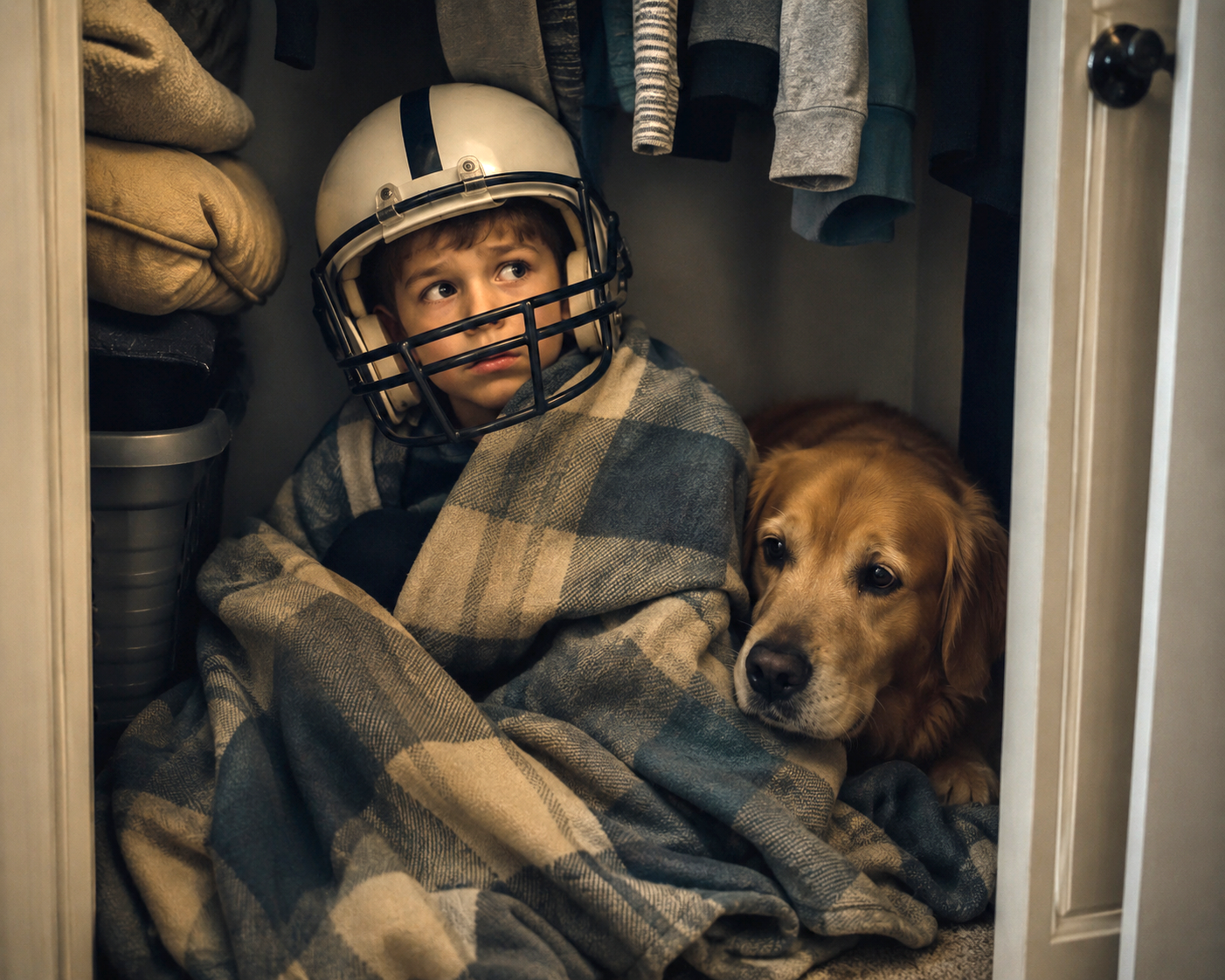
June is National PTSD Awareness Month, my wedding anniversary (June 17) and my beautiful wife’s birthday (June 21). The warmer months of spring and summer have a way of welcoming the feeling of renewal; however, these beautiful months also sometimes bring dangerous and unpredictable weather. Thunderstorms, heavy rain and wind, and even tornadoes all occur during this season, especially in tornado alley, Oklahoma. Physical safety is the immediate concern and is typically the first thing that comes to mind when severe weather occurs; however, it is important to highlight the importance of recognizing the psychological and emotional impact that bad weather often has on children and adults.
Surviving traumatic weather often leaves a lingering impact on those who have lived through such events. Some people have reoccurring thoughts or memories surrounding the destruction the storm caused or have a physical reaction in their body, such as a racing heart, butterflies in their stomach or tingling in their hands or face when remembering a previous experience where they had to rush to a shelter or evacuate. These memories can easily be triggered when hearing news of possible or impending severe weather, when the sky becomes dark or the clouds look a certain way or when the tornado sirens roar. These reminders can trigger major anxiety or panic, in addition to symptoms related to post traumatic stress disorder (PTSD). This may sound a bit dramatic; however, it is true! People have PTSD from bad weather. Some who have experienced it firsthand, or those who have seen friends, family or colleagues experience it may experience a heightened level of fear, trouble with concentration, issues with sleep and rest or a continual feeling of dread during the stormy season.
Those types of reactions are connected to the natural survival system most of us have that’s often referred to as fight, flight or freeze responses. When someone suspects danger, our brain sends a signal to our body that should alert us to prepare to act immediately. Each of our body signals are different and can be different, either more severe or less noticeable considering what the situation is. Common body signals are increased heart rate, faster breathing, butterflies in the stomach, fuzziness or tingling in the hands or face, fidgetiness and/or tense muscles. Our body signals are helpful when there is a real emergency; however, for the individuals who have experienced trauma, those body signals can become overactive. A simple thunderstorm warning can feel like imminent danger, but the risk may be low. As time passes, that can cause someone to become avoidant or being consistently vigilant, both causing exhaustion.
Kids are sensitive to the emotional cues of the caregivers around them. Kids who have experienced scary storms may not have the vocabulary to express their thoughts or fears, but it is often expressed through irritability, clinginess and changes in their behavior. They could become anxious when the clouds get too dark or when they hear wind, or if it is raining and/or hailing, even when the conditions are safe! Caregivers have a critical role in assisting children in processing and expressing their feelings which help construct security. A basic way caregivers can assist children is by remaining calm, having a plan and being consistent. Kids often look at the reaction of adults to gauge how serious a situation is. It is important to speak calmly and to be honest, but not alarming. It is important to explain that storms can be dangerous, but also explain and show that a clear plan is in place that ensures safety, allowing children to feel secure and to maintain their control.
Preparation is empowering and involving kids in the safety planning process, such as having them identify a safe place at home or practicing the actions which should be taken during a weather emergency, builds confidence, security and gives them agency. This should all be done and communicated in a way that promotes safety and being prepared rather than this all being a response to something scary or terrifying. It is important to be honest and allow for the news to be shown and heard; however, constant exposure and repeated scary information or developments intensify fear and anxiety. Allow the news to be shared and then remind them of the safety plan they helped create! As caregivers, we can filter the information and give appropriate explanations based on age instead of kids absorbing all of the overwhelming details. OR, if you are a caregiver and easily become overwhelmed, allow for this to be done by another adult in the home and the information can be filtered to you!
Regardless, children and adults will need their feelings acknowledged rather than dismissed. Validation of feelings is key! It is OK to say “it is OK that you’re nervous during storms,” because this minimizes shame and allows room for coping exercises to be done. Grounding and mindfulness exercises are helpful, and slow deep breathing naturally calms the heart rate and regulates the nervous system and our bodies stress responses and signals. With the warmer weather here, there can always be some level of unpredictability; however, accepting and understanding its psychological impact gives us all room to thoughtfully prepare and respond. It is a balancing act, really. By balancing emotional awareness with being prepared, it is possible to maintain safety while also protecting our mental health, physical safety and overall well-being.
Remember if you or someone you know needs mental health assistance of any kind, please feel free to reach out to your local community mental health agency or call or text 988, the suicide and crisis lifeline or call 911 for immediate emergencies.
Take care of yourselves,
~ Relo Adams, Mr. Ponca City